

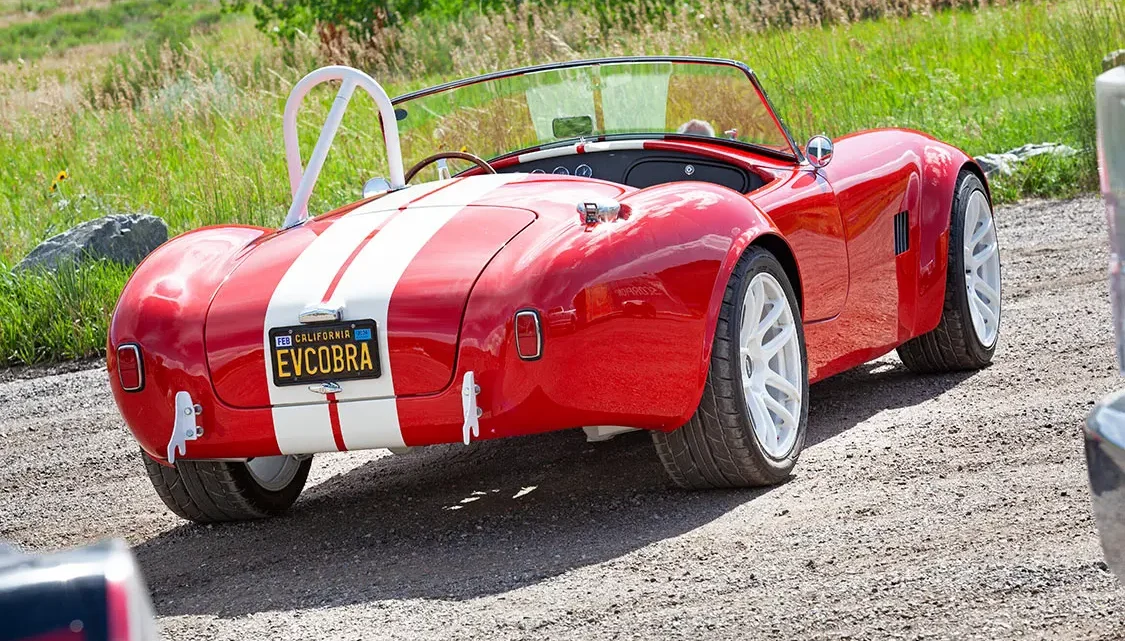
Classic Car Electrification: A Step-by-Step Guide to the EV Conversion Process
December 8, 2025You know that feeling. The rumble of a vintage V8, the smell of old leather and gasoline. It’s pure nostalgia. But what if you could keep that timeless silhouette and marry it to the instant, silent torque of an electric motor? That’s the magic—and the challenge—of a classic car electrification conversion. It’s not just swapping an engine for a battery pack. It’s a careful, often complex, rebirth.
Let’s dive into what the process actually looks like. It’s part engineering, part artistry, and a whole lot of problem-solving.
The Heart of the Matter: Key Components of an EV Swap
Before we get our hands dirty, it’s crucial to understand the main players. An EV conversion replaces the internal combustion engine and its supporting systems with a new, electric heart. Here’s the deal:
- Electric Motor(s): This is your new powerplant. Choices range from salvaged Tesla units to purpose-built motors from conversion specialists. Power output? It can vary wildly, from a modest 100hp to, well, frankly ludicrous levels.
- Battery Pack: The fuel tank of the future. Lithium-ion packs are the standard, offering the best balance of energy density and weight. Their placement is one of the biggest design challenges.
- Controller & DC-DC Converter: The brain and the nervous system. The controller manages power from battery to motor (your new throttle pedal), while the DC-DC converter steps down high-voltage to run standard 12V accessories like lights and wipers.
- Charging System: You’ll need an onboard charger. Most conversions aim for Level 2 charging capability—filling the battery overnight, just like your modern EV.
The Conversion Process: From Empty Bay to Road Ready
Okay, so how does it all come together? Honestly, no two conversions are identical. A VW Beetle swap is a different beast from a Jaguar E-Type conversion. But the general roadmap looks something like this.
1. The Tear-Down & Assessment Phase
It starts with a bare shell. The engine, transmission, fuel tank, exhaust, and associated plumbing—all of it comes out. This is a critical moment. You’re not just removing parts; you’re assessing the car’s bones. Rust repair, structural integrity, and brake/suspension condition must be addressed now. It’s the foundation.
2. The Design Puzzle: Where Does Everything Go?
This is where the real head-scratching begins. The battery pack is heavy and bulky. For handling and safety, you want its weight low and centered. Many converters place modules in the former transmission tunnel, under the hood, or where the fuel tank was. The motor often slots onto the existing transmission or a new, simplified single-speed gearbox.
It’s a 3D jigsaw puzzle with consequences for weight distribution. Get this wrong, and the car will feel… off.
3. Fabrication & Installation
Now we get hands-on. Custom motor mounts and battery trays need to be fabricated and welded in place. High-voltage cabling, thicker than your thumb, must be routed safely away from heat and sharp edges. The 12V system is rewired to integrate with the new controller.
This phase is a blur of welding sparks, wiring diagrams, and test-fits. It requires a blend of mechanical skill and electrical know-how that, frankly, is rare.
4. The Digital Nervous System: Integration & Programming
The physical stuff is in. Now, the car needs to be taught how to run. The controller is programmed—defining parameters like regenerative braking strength, throttle response, and power limits. The instrument cluster is often modified or replaced with a digital display showing battery state-of-charge, not RPMs.
Getting all these digital components to talk to each other, and to you, is a huge part of the modern classic car electrification process.
5. Testing, Refining, & The First Silent Drive
Rigorous systems checks come first. Then, cautious low-power tests. Finally, that unforgettable moment: the first drive. There’s no roar, just a whine and the sound of tires on asphalt. The refinement phase that follows—tweaking suspension for the new weight, balancing brakes, smoothing out throttle response—is what separates a functional conversion from a great one.
Weighing the Current: Key Considerations & Trade-Offs
It’s not all smooth sailing. Here are the big considerations every converter grapples with.
| Consideration | The Challenge | The Modern Solution |
| Range | Limited space for batteries. | Using highest-density cells; accepting 100-150 mile realistic range. |
| Cost | It’s significant. Batteries alone can be $10k-$20k. | Kits are bringing costs down; DIY labor offsets some expense. |
| Weight | Batteries are heavy, affecting handling. | Strategic placement (low & centered) to improve, not hurt, balance. |
| Preservation vs. Modification | Cutting into a classic’s structure feels wrong to some. | Reversible conversions are gaining traction; keeping original parts. |
And then there’s the character question. Sure, you lose the engine sound—a visceral part of the classic experience for many. But what you gain is a new kind of purity. You hear the road more. You feel the chassis dynamics without the vibration. It’s a different, but deeply engaging, relationship with the machine.
Is It Right For You? The Final Verdict
So, who should consider a classic EV conversion? Well, it’s not for the purist who views originality as sacred. And it’s not a cheap way to get an electric car—a new Nissan Leaf will cost less.
But. If you’re the kind of person who sees a classic as a living canvas, if you crave modern reliability and blistering acceleration wrapped in vintage style, then it’s a compelling path. It’s for the tinkerer, the engineer-at-heart, the environmentalist with a taste for timeless design.
The process of classic car electrification is more accessible than ever, with a growing ecosystem of specialist companies offering kits and complete services. It democratizes a technology that’s reshaping our roads, and applies it to the cars we fell in love with.
In the end, it’s not about erasing history. It’s about writing a new chapter for it. One where a ’67 Mustang or a ’59 Mini can silently glide into a future it was never meant to see, not as a museum piece, but as a driven, beloved machine. Reborn, not retired.