

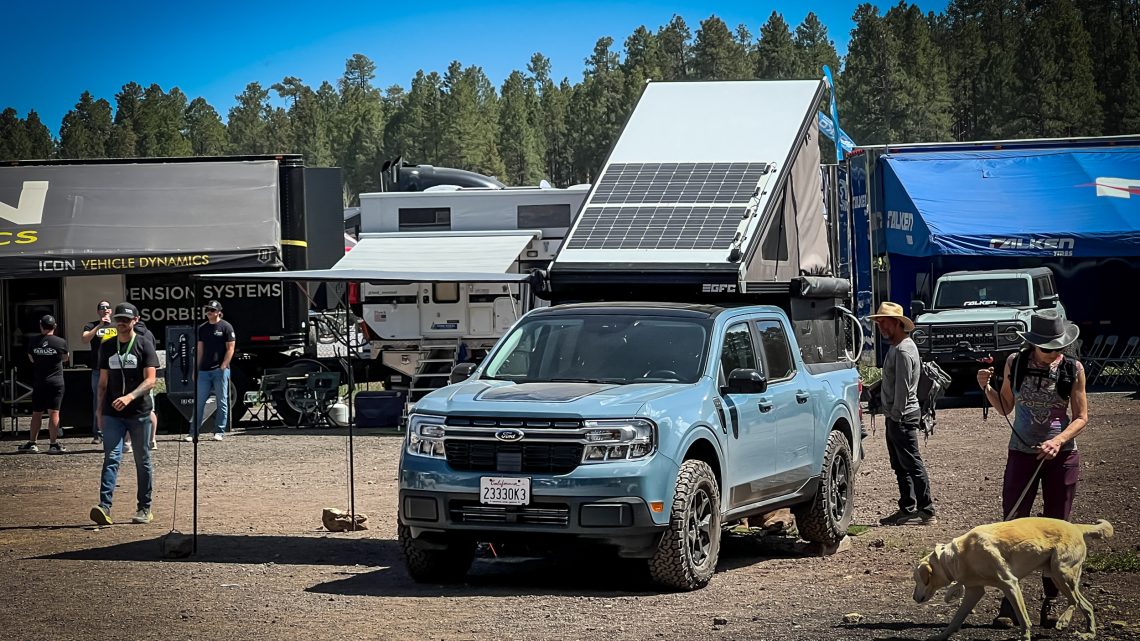
Planning and Executing Long-Distance Overland Adventures in Electric SUVs
December 15, 2025The open road calls. But these days, the hum under the hood isn’t a diesel rumble—it’s the near-silent whir of an electric motor. Taking an electric SUV on a true long-distance overland adventure isn’t just possible anymore; it’s becoming a thrilling new frontier. Honestly, it flips the script on everything we thought we knew about exploration.
Here’s the deal: it requires a different mindset. You’re trading fuel cans for kilowatt-hours, gas station spontaneity for strategic charging stops. But the payoff? Unbelievable torque, serene campsites, and a lighter footprint. Let’s dive into how to make your epic e-overland journey not just a dream, but a brilliantly executed reality.
The New Overlanding Mindset: Energy, Not Just Fuel
First things first. You have to start thinking in terms of energy management. Range isn’t a fixed number on your dashboard; it’s a living, breathing figure that dances with elevation, weather, your speed, and even the weight of your gear. It’s a bit like managing your phone battery on a long day out, but, you know, for a two-ton vehicle.
That said, the core principles of overlanding—self-reliance, preparedness, route knowledge—are more crucial than ever. They just get a 21st-century twist.
Pre-Trip Planning: Your Digital Scout
This phase is non-negotiable. You can’t just point your EV toward the horizon and hope. Meticulous planning is your best friend.
- Route Mapping with Charging Layers: Use apps like PlugShare, A Better Routeplanner (ABRP), and even the car’s native nav. Don’t just look for chargers on the route—look for them near potential campsites or scenic detours. Always have a backup charger option.
- Understand the Charger Types: For long-distance travel, DC Fast Chargers (DCFC) are your lifeline. Level 2 chargers are for overnight stops. Know the difference between CCS, CHAdeMO, and Tesla’s Supercharger network (if you have an adapter).
- Factor in the “Overland Tax”: Roof racks, all-terrain tires, extra gear—they all hit your aerodynamics and efficiency. Honestly, if your SUV’s rated for 300 miles, plan your legs for 200-230 miles in real-world, loaded-down conditions. It’s a safe buffer.
- Paper Maps Aren’t Dead: In remote areas, cell service vanishes. Have physical maps and know the locations of “destination chargers”—slower plugs at campgrounds, hotels, or even museums that can be a lifeline.
Gear Up: The Essential E-Overland Kit
Beyond the usual recovery boards and first-aid kit, your packing list needs some special additions. Think of it as bridging the gap between the digital and the wild.
| Gear Category | Specific Items for EV Overlanding | Why It’s Critical |
| Power & Charging | Portable Level 2 EVSE (mobile charger), a hefty 50-amp extension cord, a full set of plug adapters (NEMA 10-50, 14-50, TT-30, etc.). | Campgrounds and remote outlets have varied plugs. Adaptability equals energy. |
| Energy Reserve | High-capacity portable power station (solar optional), 12V fridge, LED lighting. | Runs camp essentials without draining your vehicle’s main battery, saving range for driving. |
| Navigation & Comms | Satellite communicator (Garmin inReach), offline maps downloaded, paper topo maps. | When you’re off-grid, you need a way to navigate and call for help—especially if you’re conserving battery. |
| Mindset Tools | Patience, flexibility, and a good book or podcast for charging stops. | Fast charging isn’t always 15 minutes. Embrace the pause as part of the journey. |
On the Trail: Executing Your Energy Plan
You’ve planned. You’ve packed. Now you’re rolling. This is where the rubber meets the… well, the dirt.
Drive for efficiency, not just speed. On highways, moderate your speed—it’s the biggest range killer. On technical trails, use the EV’s instant, controllable torque to your advantage. One-pedal driving can be a revelation in descent control, saving your brakes and recouping some energy.
Charge smarter, not just harder. Top up whenever you can, even if you don’t “need” it yet. See a fast charger at a trailhead with 50% battery? A quick top-off to 80% might give you the confidence for an unplanned scenic loop. And speaking of 80%, charging slows way down after that—it’s often better to hit the road and catch the next charger.
Camp with power. One of the secret joys? Your EV is a massive power bank. Use it to run your fridge, lights, or even a small induction cooker (judiciously!). But set a limit. Don’t drain your drive battery to zero for a fancy dinner. That’s a recipe for a very stranded morning.
When Things Don’t Go to Plan
It happens. A charger is out of service. A detour adds miles. The weather turns cold and saps your range.
First, don’t panic. Your car’s range estimate is a guess—a good one, but a guess. Slow down. 5-10 mph less can add crucial miles. Shed unnecessary electrical loads: turn down the climate control, seat heaters. Reroute to your backup charger option using your offline tools.
And in a true pinch, that satellite communicator isn’t just for SOS. You can message a friend to scout charger status ahead. The community, honestly, is amazing. PlugShare often has real-time check-ins from other drivers.
The Unbeatable Payoff
Sure, there are extra steps. But the moments you get in return? Priceless. Waking up in total silence, having “idled” your campsite with battery power all night. Gliding through a forest so quietly you hear wildlife you’d normally scare off. The feeling of moving through a landscape powered, in a small way, by the sun and wind.
It redefines the journey. Those charging stops force you to linger in small towns you’d have blown through. You talk to people. You notice things. The adventure becomes not just about the destination, but about the entire, mindful system of getting there.
Planning and executing a long-distance overland trip in an electric SUV isn’t about replicating a gas-powered trip. It’s about embracing a new, more intentional rhythm of travel. It connects you to the landscape in a deeper way—not just as a spectator, but as a participant in a newer, quieter kind of exploration. The road ahead is electric, and honestly, it’s more inviting than ever.