

Motorcycle Mental Health and Mindfulness on Long Rides
July 6, 2026There’s something about the open road that calls to you. The hum of the engine, the wind cutting across your jacket, the horizon stretching like a promise. Long rides aren’t just about distance — they’re about presence. And honestly, that’s where motorcycle mental health and mindfulness on long rides starts to make real sense. You don’t need a meditation cushion or a yoga mat. You just need two wheels and a willingness to slow your mind down.
Why the Road Feels Like Therapy
Let’s be real — life is noisy. Emails, notifications, the constant buzz of “shoulds” and “musts.” But when you’re on a bike, that noise fades. The engine becomes a kind of white noise. The road demands your attention. Not in a stressful way — more like a gentle nudge to stay in the moment.
I’ve had rides where I started with a head full of static. Worries about work, relationships, that thing I said three years ago. But by mile fifty? That static was gone. Replaced by the rhythm of the asphalt and the feeling of the sun on my shoulders. It’s not magic — it’s mindfulness in motion.
The Science Behind It (Sort Of)
Okay, I’m not a neuroscientist. But studies show that repetitive, rhythmic activities — like riding — can induce a flow state. That’s when your brain waves shift, cortisol drops, and dopamine gets a little boost. It’s like the bike is doing the heavy lifting for your mental health. You’re just along for the ride.
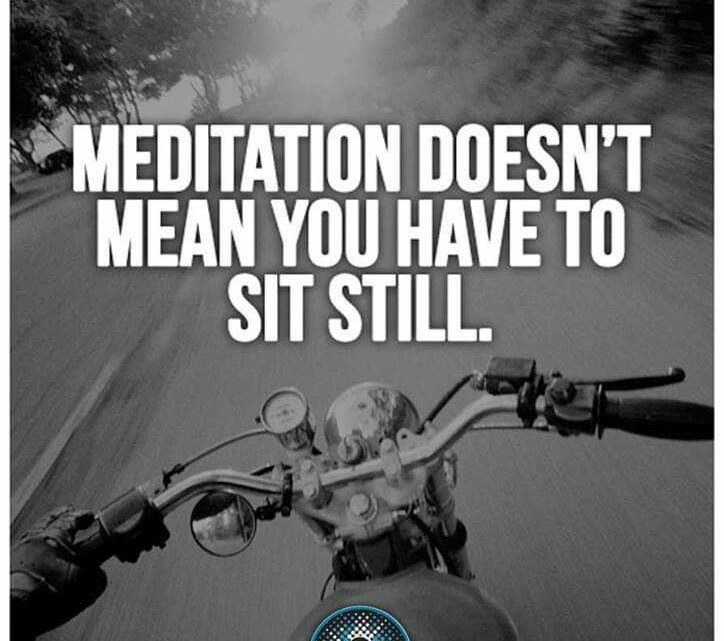
Mindfulness for Bikers: It’s Not Just Sitting Still
People think mindfulness means sitting cross-legged, eyes closed, trying not to think about pizza. But honestly? That’s not for everyone. Motorcycle mindfulness is different. It’s active. It’s engaged. You’re scanning the road, feeling the shift in temperature, noticing the way your body leans into a curve.
Here’s a little trick I use: the three-point check. Every few miles, I mentally note three things — one thing I see, one thing I feel, and one thing I hear. It sounds simple, but it anchors you. Like a meditation bell, but with wind noise.
- See: The way the light filters through the trees.
- Feel: The vibration of the handlebars, steady and reassuring.
- Hear: The engine’s rhythm — a heartbeat of its own.
That’s it. No fancy apps. No guided tracks. Just you and the ride.
When the Road Gets Heavy: Managing Ride Anxiety
Not every ride is a blissful escape. Sometimes, there’s anxiety. Maybe it’s the weather closing in, or a tricky stretch of road. Maybe it’s just your own thoughts spiraling. That’s okay. In fact, it’s part of the practice.
I remember a ride through the Smokies — fog so thick I could barely see twenty feet ahead. My chest tightened. My grip on the throttle got a little too firm. But instead of fighting it, I breathed. I slowed down. I let the fog be the fog. And you know what? It passed. The road cleared, and so did my head.
Quick Grounding Techniques for the Road
If you feel overwhelmed mid-ride, try these. They take seconds, but they can shift everything.
- Breathe into the helmet: Take three deep breaths, focusing on the air moving past your visor.
- Drop your shoulders: Tension loves to live in your neck and shoulders. Roll them back. Feel the release.
- Name the road: Say the road name out loud (or in your head). “Blue Ridge Parkway. Mile marker 47.” It sounds silly, but it pulls you back to now.
The Loneliness Factor — And Why It’s Actually Good
Long rides can feel solitary. Especially if you ride solo. But there’s a difference between loneliness and solitude. Solitude is chosen. It’s a space where you can hear your own thoughts without interference. And for mental health, that’s gold.
I’ve had conversations with myself on rides that I didn’t even know I needed. Unpacking old memories. Letting go of grudges. Just… processing. The bike becomes a moving therapy room. No co-pay required.
Riding in Groups: Mindfulness with Others
Group rides are a different beast. There’s camaraderie, sure. But also distraction. If you’re trying to stay mindful, group dynamics can pull you out of the moment. That said, riding with others can also be a lesson in patience and awareness. You’re tuned into their signals, their speed, their rhythm. It’s a shared flow state.
Just don’t let the chatter — or the pressure to keep up — steal your peace. You can be in a group and still ride your own ride.
Gear Up for the Mind, Too
We obsess over gear — helmets, jackets, gloves. But what about mental gear? Preparation matters. Before a long ride, I do a quick mental checklist. Not just “did I check the oil?” but “how am I feeling right now?”
Am I rushing? Am I carrying stress? Am I expecting the ride to fix something? Sometimes just naming that expectation helps me let it go.
| Physical Gear | Mental Gear |
|---|---|
| Helmet | Intention for the ride |
| Riding jacket | Patience with yourself |
| Gloves | Willingness to stop if needed |
| Boots | Openness to the moment |
See the pattern? The physical stuff protects your body. The mental stuff protects your soul.
When the Ride Ends: Bringing It Home
The hardest part of a long ride? Coming back. That clarity, that calm — it can fade fast when you hit traffic or check your phone. So I’ve started doing something small: a five-minute decompression after I park. I sit on the bike, engine off, and just… sit. Let the silence settle. Then I step off.
It’s like a bridge between the road and the rest of life. Without it, the mindfulness leaks away. With it, I carry a little bit of that peace into the evening.
Final Thoughts (No Sales Pitch, Just the Road)
Look, I’m not saying a motorcycle will fix your mental health. It won’t. But it can be a tool — a powerful one — for finding your way back to yourself. The road doesn’t judge. It doesn’t rush. It just is. And if you let it, that can be enough.
So next time you throw a leg over the saddle, take a breath. Feel the seat beneath you. Listen to the engine. And remember — you’re not just riding. You’re arriving. Right here, right now.