
Motorcycle Safety for Urban Commuters: The Real-World Guide
August 31, 2026Let’s be honest—commuting on two wheels in the city is a different beast. It’s not the open highway, where the biggest threat is a deer or a drowsy trucker. No, urban riding is a chess match played at 35 mph, with distracted drivers, potholes that appear overnight, and that one taxi driver who genuinely believes turn signals are optional. You love the speed, the lane-splitting, the way you can slip through gridlock like water through cracks. But here’s the deal: that freedom comes with a steep learning curve. And the stakes? Well, they’re as high as they get.
So, how do you stay safe when the city is literally trying to kill you? It’s not just about gear—though that’s a big chunk. It’s about mindset, technique, and a few habits that separate the daily riders from the statistics. Let’s break it down, piece by piece, without the preachy stuff. Just real talk for real riders.
Your Brain is the Best Safety Device
Before we talk about helmets or tires, we need to talk about what’s between your ears. The most dangerous thing on your commute isn’t the semi truck beside you—it’s complacency. When you ride the same route every day, your brain starts to autopilot. You know that intersection where the light always changes late? You stop looking. You know that blind curve near the coffee shop? You stop expecting the car that’s about to pull out.
Well, that’s exactly when the universe throws a curveball. I’ve been there. You’re thinking about a deadline, and suddenly a car door swings open right in your path. The fix? Re-commit to active scanning every single ride. Treat every intersection as a potential crash site. Treat every parked car as a door about to open. It sounds paranoid, but honestly, paranoia is just another word for “awareness” in urban riding.
The “What If” Game
Here’s a trick that works: play the “what if” game. As you ride, continuously ask yourself—what if that car swerves? What if that pedestrian steps out? What if that oil slick is just around the corner? You’re not being negative; you’re building a mental escape route. It takes two seconds, and it can save your life. I know it sounds simple, but most riders don’t do it. They just… ride. Don’t be most riders.
Gear Up, But Smartly
Okay, let’s talk gear. But not the full race-suit stuff—unless you want to sweat through your commute, which you don’t. Urban riding demands a balance between protection and practicality. You need gear that you’ll actually wear, not just stuff that sits in your closet. That’s the real secret.
Helmet: Non-Negotiable, But Choose Wisely
Your helmet is your lifeline. Look for DOT or ECE certification—those are the safety standards that matter. But for city riding, consider a modular or flip-up helmet. Why? Because you’re stopping at lights constantly, and being able to flip up the front for a sip of water or a quick chat with a delivery driver is a game-changer. Just make sure it’s locked properly before you roll. And for the love of all that is holy, replace it after any significant drop. The foam inside is one-time-use, even if the shell looks fine.
Jacket, Gloves, and Pants: The Sliding Layer
You don’t need leathers for a 15-mile city commute. But you do need abrasion resistance. Look for textiles with Kevlar or Cordura—they’re lighter and more breathable. And gloves? Always. Even in summer. I know it’s hot, but the first thing you’ll do in a slide is put your hands out. That’s instinct. And without gloves, you’re looking at skin grafts. Not fun.
For pants, I’m a big fan of over-pants with armor. You can wear regular jeans over them, or just wear them alone if they look decent. The point is, armor at the knees and hips is non-negotiable. Those are the first points of impact in a low-side.
Lane Splitting: The Art and the Danger
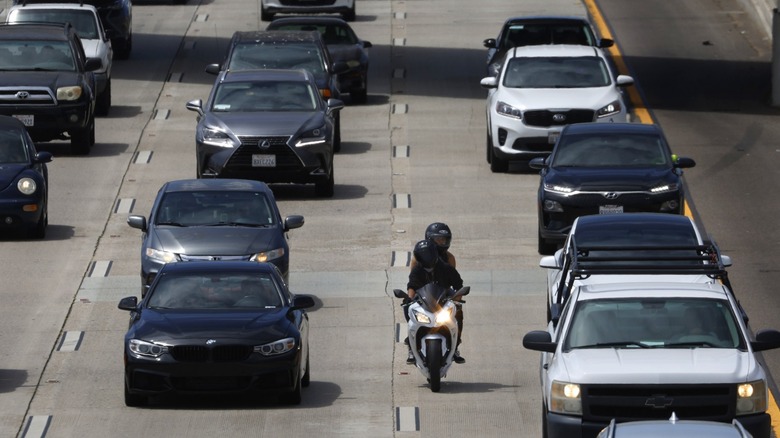
Ah, lane splitting. It’s legal in California, and a gray area elsewhere. When done right, it’s efficient and relatively safe. When done wrong, it’s a one-way ticket to the hospital. Here’s the thing—you have to be honest with yourself about your skill level. Splitting at 50 mph while traffic is crawling at 5 mph is asking for trouble. The speed differential is too high.
If you’re going to split, do it at a reasonable speed—no more than 10-15 mph faster than the surrounding traffic. And watch for the gaps. Cars change lanes without checking mirrors. It’s a fact. So, you need to be the one watching for their head movements. If you see a driver’s head turn toward you, they’re about to move. Give them space. Always assume they don’t see you.
Intersections: The Kill Zone
Statistically, a huge chunk of urban motorcycle accidents happen at intersections. It’s where right-of-way confusion lives. You’re sitting at a red light, and the car behind you is looking at their phone. Or you’re going through a green, and someone turns left right in front of you. It’s the classic “left cross” scenario, and it kills riders every single day.
Here’s my strategy: when approaching any intersection, cover your brake and clutch. Slow down a touch, even if the light is green. Look for the “escape route”—the gap between cars where you can swerve if needed. And when the light turns green, don’t be the first one to launch. Count to two. Let the car beside you go first. That extra second can be the difference between seeing the red-light runner or becoming their hood ornament.
Weather and Road Conditions: The Silent Variables
City streets are a mess. Potholes, manhole covers, painted lines, and that mysterious puddle that’s actually a deep puddle hiding a crater. Rain makes it all worse. Wet paint is like ice. Manhole covers are slicker than a greased pig. And leaves? They’re not just fall decorations—they’re slippery death traps when wet.
So, what do you do? Slow down. Increase your following distance. And avoid sudden inputs—no hard braking, no sharp leans. Smooth is fast, and smooth is safe. Also, check your tires. Your tires are the only thing between you and the asphalt. Check the pressure weekly, and look for wear. A bald tire in the rain is a crash waiting to happen.
The Hidden Danger: Your Own Ego
I’ll admit it—I’ve been guilty of this. You’re at a light, and a sportbike pulls up next to you. You rev. They rev. The light turns green, and suddenly you’re racing through a residential street. That’s not riding; that’s gambling. And the house always wins.
Urban commuting isn’t about being the fastest. It’s about being the smartest. It’s about getting home to your family, your dinner, your couch. The ego is a sneaky killer. Check it at the curb. Let the other guy be the hero. You’ll see him at the next red light anyway—and you’ll both be alive.
Practical Tips: A Quick Checklist
Let’s wrap this up with some actionable stuff. Print this out, stick it on your garage wall, or just screenshot it. Here’s the deal:
- Plan your route—avoid highways if you can. Surface streets are slower but more predictable.
- Use your mirrors every 5-10 seconds—know what’s behind you at all times.
- Assume every car is out to get you—it’s not personal, it’s just defensive riding.
- Take a refresher course—even if you’ve been riding for years. The MSF (Motorcycle Safety Foundation) has advanced courses.
- Wear high-visibility gear—even a neon vest. It’s ugly, but it works. Drivers see bright colors, not grey.
- Stay hydrated and fed—low blood sugar affects reaction time. I’ve nearly dropped my bike because I skipped breakfast.
The Data Doesn’t Lie
Just to put things in perspective, let’s look at some numbers. The NHTSA reports that motorcyclists are about 28 times more likely to die in a crash than car occupants, per vehicle mile traveled. But here’s the kicker—most of those crashes involve riders without proper training or gear, and often involve alcohol or excessive speed. You’re already ahead of the curve by reading this. But let’s see it visually:
| Risk Factor | Impact on Crash Likelihood |
|---|---|
| Riding without a helmet | 3x higher risk of head injury |
| Riding after drinking | 5x higher risk of fatal crash |
| No formal training | 2x higher risk of at-fault crash |
| Lane splitting at high speed | Significantly higher severity |
See the pattern? It’s not about luck. It’s about choices. Every single one of those factors is within your control.
Final Thoughts: Ride Like You Mean It
Urban commuting is a skill, not a chore. It’s a dance with chaos, a negotiation with steel and glass. And honestly, that’s what makes it thrilling. But the thrill fades fast when you’re picking gravel out of your knee. So, make the choice today. Not tomorrow, not next week. Today.
Check your tire pressure. Adjust your mirrors. Plan your route with safety in mind. And when you swing your leg over that saddle, take a breath. The city will still be there, waiting. But you’ll be ready for it—every pothole, every distracted driver, every moment of chaos. That’s not just riding. That’s mastery.
And remember—the best ride is the one you finish. Every single time.
[Meta title: Motorcycle Safety for Urban Commuters: Essential Tips & Gear | Meta Description: Learn practical motorcycle safety tips for city riding. From